IV therapy has become a familiar term in healthcare and wellness. However, many people are unsure what an IV drip actually does.
You may have seen IV therapy used in hospitals. You may also have noticed wellness clinics offering vitamin or hydration drips. Although both use intravenous delivery, their purposes can be very different.
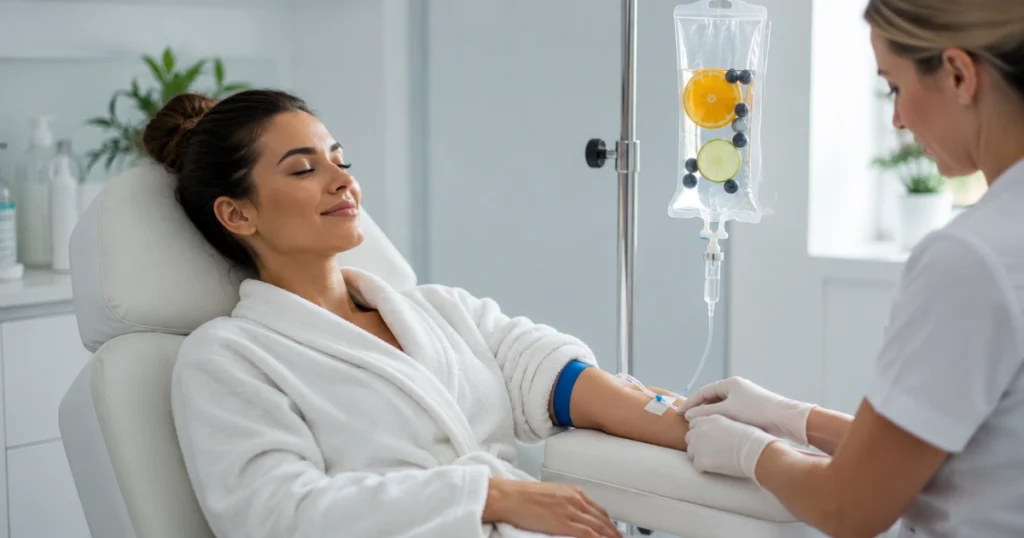
IV therapy sends fluids or other suitable substances directly into the bloodstream through a vein. A trained healthcare professional places a small plastic tube, called a cannula, into the vein before starting the infusion.
This guide explains how IV drips work and what happens during a session. It also covers safety, suitability, possible risks, and realistic expectations.
What Is IV Therapy?
IV stands for intravenous, which simply means “into a vein”.
IV therapy is a method of delivering fluids, medicines, or other suitable substances directly into the bloodstream. A small cannula is normally placed into a vein in the hand or arm.
In medical settings, IV therapy can deliver fluids, electrolytes, medicines, nutrition, and other treatments. NICE explains that IV fluid therapy is used when a person’s fluid or electrolyte needs cannot be adequately met through oral or enteral routes.
Wellness IV drips may contain different combinations of fluids, vitamins, minerals, or other ingredients. Their contents and purpose should always be considered carefully before treatment.
What Does Intravenous Mean?
Intravenous means that something is delivered directly into a vein.
This is different from swallowing a tablet or drinking a liquid. Oral products must first travel through the digestive system before their ingredients can enter circulation.
An IV infusion enters the bloodstream through a cannula instead.
What Can Be Given Through an IV?
The answer depends on why IV therapy is being used.
In healthcare settings, an IV may deliver:
- Fluids
- Electrolytes
- Medicines
- Glucose
- Certain nutrients
- Other prescribed treatments
Wellness clinics may offer IV formulations containing selected vitamins, minerals, antioxidants, or other substances.
The exact ingredients should always be appropriate for the individual. Professional assessment is important before anything is administered intravenously.
How Do IV Drips Work?
An IV drip uses gravity or an infusion device to move liquid from a bag through tubing.
The tubing connects to a small cannula placed inside a vein. The fluid then enters the person’s circulation over a controlled period.
This sounds quite technical, but the basic process is straightforward.
The Cannula Is Placed Into a Vein
A trained professional normally identifies a suitable vein in the hand or arm.
A needle is used briefly to guide a small plastic cannula into place. The needle is then removed, leaving only the flexible plastic tube inside the vein.
The cannula is usually secured using a clear dressing. NHS patient information describes the cannula as a small plastic tube rather than a needle left inside the arm.
You may feel a brief pinch or sting during insertion. Some people feel very little discomfort.
The Fluid Enters the Bloodstream
Once the cannula is secure, the IV tubing is attached.
The solution then moves through the line and into the bloodstream. The rate depends on the type of infusion, ingredients, amount of fluid, and individual requirements.
A trained professional should monitor the cannula and how you feel during treatment.
Why IV Therapy Bypasses Digestion
One major difference between intravenous and oral delivery is the route.
A tablet, drink, or food must pass through the digestive system. The ingredients then need to be absorbed before reaching systemic circulation.
Intravenous administration skips this absorption stage because the substance enters the bloodstream directly.
This difference in delivery should not automatically be interpreted as meaning IV therapy provides better health outcomes.
Does IV Therapy Provide 100% Absorption?
You may see IV therapy advertised as providing “100% absorption”.
That description needs some care.
In pharmacology, substances delivered intravenously are considered to have 100% bioavailability at the point of administration because they enter systemic circulation directly. Oral substances can have lower bioavailability because absorption and first-pass metabolism affect how much reaches circulation.
However, 100% bioavailability does not mean the body uses 100% of every nutrient. It also does not prove that an IV drip gives a healthier or better result than food or oral supplements.
UK advertising guidance specifically warns against suggesting IV nutritional therapy is more beneficial than oral nutrition without adequate supporting evidence.
Medical IV Therapy and Wellness IV Drips Are Not the Same
This distinction is important.
IV therapy is widely used in hospitals and other clinical settings. It can be necessary when fluids, medicines, or other substances need direct intravenous delivery.
NICE states that IV fluid therapy in hospital should be based on individual assessment. Skilled healthcare professionals should prescribe, administer, assess, and monitor appropriate IV fluid therapy.
Wellness IV therapy is different.
Wellness drips are generally offered to people who are not receiving emergency hospital treatment. They may contain fluids alongside vitamins, minerals, or other ingredients.
This does not mean every wellness IV drip provides proven additional health benefits.
The UK ASA and CAP have said they have not yet seen convincing evidence supporting many advertised benefits of specific IV nutritional therapies in generally healthy people. Claims around energy, immunity, detoxification, recovery, skin health, and similar outcomes therefore require strong supporting evidence.
Understanding this difference helps people make more informed decisions.
What Can an IV Drip Contain?
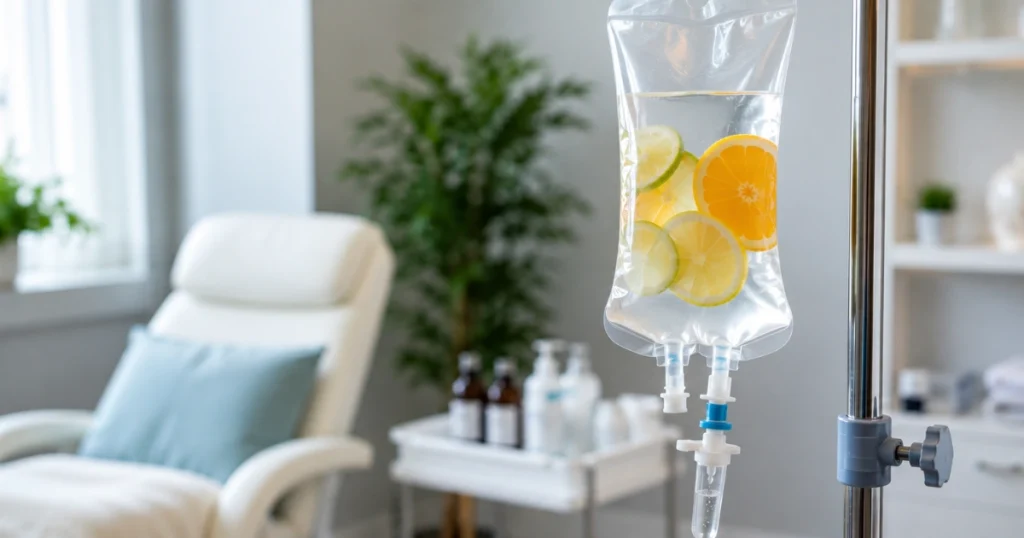
There is no single formula used for every IV drip.
The ingredients depend on the purpose of the infusion and the person’s suitability.
Fluids and Electrolytes
IV fluids can contain water together with electrolytes, sometimes called salts.
NICE explains that medical IV fluids may contain water, electrolytes, and glucose. These are used in healthcare when appropriate to manage fluid or electrolyte needs.
In a wellness setting, a drip may also use a suitable fluid base.
However, people who can hydrate normally should not assume an IV drip is automatically superior to drinking fluids.
Vitamins and Minerals
Some wellness IV drips contain selected vitamins or minerals.
Commonly discussed ingredients may include:
- Vitamin C
- B vitamins
- Magnesium
- Zinc
- Calcium
The amount and combination can vary considerably.
Having an ingredient with a known role in normal health does not automatically prove that delivering extra amounts intravenously will improve health in someone who is already adequately nourished.
Other Ingredients
Some IV wellness services may use substances such as glutathione or NAD+.
These require their own suitability considerations, evidence review, and professional assessment.
A person should understand exactly what is being administered before treatment begins.
Common Types of IV Drips
Different clinics use different names for their IV treatments.
Names often reflect the ingredients or the wellness goal being marketed. However, a drip name should not be treated as proof that it produces a specific health outcome.
Hydration Drips
A hydration drip generally contains intravenous fluid and may include electrolytes.
In medical care, IV fluids have an established role where a person’s needs cannot be met safely through oral or enteral routes.
Wellness hydration drips are sometimes marketed after exercise, travel, heat exposure, or alcohol use.
However, providers should not claim that an IV gives better hydration than oral methods for generally healthy people unless they have suitable evidence. The ASA has specifically challenged this type of claim.
Vitamin IV Drips
Vitamin IV therapy involves adding selected vitamins or minerals to an intravenous solution.
The exact formulation can vary widely.
People considering a vitamin drip should understand the ingredients, amounts, reason for treatment, and possible risks before proceeding.
More vitamins do not automatically mean greater benefit.
Myers’ Cocktail
The term Myers’ Cocktail is commonly used for an IV mixture containing nutrients such as B vitamins, vitamin C, magnesium, and calcium.
The exact recipe can vary between providers.
It is sometimes marketed for fatigue, general wellness, or immune-related support. However, UK ASA assessments have found the evidence presented for claimed general health benefits of Myers’ Cocktail-style IV therapy inadequate.
It is therefore better to describe the ingredients and process without promising an outcome.
Vitamin C Infusions
Vitamin C can also be administered intravenously.
The reason, dose, suitability, and regulatory context matter greatly. High-dose medical vitamin C and general wellness vitamin C drips should not automatically be treated as the same service.
Claims about immunity, disease prevention, or treatment require particular care.
Glutathione-Containing Drips
Some wellness formulations contain glutathione.
Glutathione is naturally present within the body and is involved in antioxidant processes.
However, claims that a glutathione IV will “detox” the body, brighten skin, slow ageing, or improve general health require suitable evidence. The ASA expects robust evidence for aesthetic and health claims relating to IV nutritional therapy.
NAD+ IV Therapy
NAD+, or nicotinamide adenine dinucleotide, is naturally involved in cellular processes.
Some wellness clinics provide NAD+ through intravenous or injectable routes.
This is an area attracting growing public interest. However, marketing claims should not go beyond the available evidence or promise improved energy, anti-ageing effects, brain performance, or disease-related outcomes without appropriate evidence.
What Happens During an IV Therapy Session?
Knowing what to expect can make a first appointment feel less unfamiliar.
The exact process varies between providers. A responsible service should include consultation, suitability assessment, professional administration, and appropriate aftercare.
Step 1: Consultation
The appointment should begin with a conversation.
You may be asked about your general health, medical history, medicines, allergies, previous reactions, lifestyle, and reasons for considering treatment.
This is not simply paperwork.
The information helps determine whether the proposed IV therapy may be suitable. It also provides an opportunity to ask questions about the ingredients and process.
Step 2: Suitability Assessment
Not every IV treatment is suitable for every person.
Individual factors can affect whether an infusion is appropriate. These may include existing conditions, medicines, allergies, pregnancy, kidney function, heart problems, and other health considerations.
A suitability assessment should happen before treatment begins.
You should also be told when another healthcare service or your GP may be more appropriate.
Step 3: Cannula Insertion
Once treatment has been considered appropriate, a vein is selected.
The skin should be cleaned using an appropriate aseptic technique. NHS cannula guidance describes hand hygiene, skin disinfection, gloves, and a sterile dressing as important steps used to reduce infection risk.
A small cannula is then placed into the vein.
You may notice a short sting during insertion.
Step 4: The Infusion
The IV bag is connected after the cannula is secured.
You can usually sit or lie comfortably while the liquid flows through the IV line.
Many people read, use their phone, or simply relax during an infusion.
The professional providing the treatment should remain attentive to how you feel. Any pain, burning, swelling, dizziness, or unexpected symptoms should be reported immediately.
Step 5: Cannula Removal and Aftercare
Once the infusion is complete, the IV line is disconnected.
The cannula is removed and a small dressing is placed over the insertion site.
Removal is generally straightforward. Minor bruising can sometimes appear around the area afterwards.
Aftercare guidance should be provided when needed.
How Long Does an IV Drip Take?
The length of an IV therapy session varies.
The A1 Wellness Drips website states that most of its IV drip appointments take around 30 to 60 minutes, although the exact time depends on the treatment.
Some infusions may take longer.
The rate should not simply be increased to finish faster. It depends on the fluid, ingredients, protocol, and the individual receiving treatment.
Your appointment may also include time for consultation and suitability assessment before the drip begins.
Does IV Therapy Work Faster Than Oral Supplements?
Intravenous administration reaches circulation directly.
This means the administered substance does not first need gastrointestinal absorption. In pharmacology, IV administration therefore provides immediate systemic availability of the administered dose.
However, this should not be confused with saying every wellness effect happens instantly.
How someone responds depends on many factors, including:
- The substance being given
- The reason it is being used
- The person’s existing nutrient status
- Their general health
- The dose
- The outcome being measured
For healthy people, faster delivery does not automatically mean a better health result.
UK ASA guidance says marketers need strong evidence before claiming IV nutritional therapy works faster or better than diet or oral supplementation.
What Are the Possible Risks and Side Effects of IV Therapy?
IV therapy involves breaking the skin and entering a vein.
That means it is not completely risk-free.
The exact risk depends on the infusion and ingredients involved. Some risks come from the cannula itself, while others may relate to what is being administered.
Bruising or Bleeding
A small amount of bruising can occur around the cannula site.
This is more likely when inserting the cannula is difficult or several attempts are required. Minor bleeding can also occur during insertion or removal.
Tell the practitioner if you take medicines that affect bleeding.
Pain or Irritation
The initial cannula insertion may cause a brief sting.
Pain should not continue throughout the infusion.
Tell the professional immediately if you notice:
- Burning
- Increasing pain
- Stinging
- Tenderness
- Redness
- Swelling
These symptoms may suggest that the cannula needs checking.
Infection
Any procedure that breaks the skin carries some infection risk.
Good hand hygiene, skin cleaning, aseptic technique, and appropriate cannula care help reduce this risk.
Pain, warmth, spreading redness, swelling, fever, or chills after treatment require appropriate medical advice.
Phlebitis
Phlebitis means inflammation or irritation of a vein.
A cannula can sometimes irritate the vein wall. The affected area may become sore, red, tender, tight, or uncomfortable.
The practitioner should assess any symptoms during treatment.
Leakage Outside the Vein
IV fluid can occasionally move into the surrounding tissue instead of remaining inside the vein.
This may cause swelling, discomfort, burning, or changes around the cannula site.
Tell the practitioner immediately if the area begins to swell or hurt.
Reactions to Individual Ingredients
Some risks depend on the substance inside the drip.
Medicines and other infused substances can have individual side effects, interactions, contraindications, or allergic reactions.
This is why knowing the complete formulation matters.
A previous reaction, allergy, medical condition, or medicine should always be discussed before treatment.
Is IV Therapy Suitable for Everyone?
No.
An IV drip should never be treated as a universal wellness treatment.
Some people require additional assessment, a different approach, or medical advice before intravenous treatment can be considered.
Suitability may be affected by:
- Current health problems
- Kidney conditions
- Heart conditions
- Medicines
- Allergies
- Pregnancy or breastfeeding
- Previous reactions
- Fluid balance concerns
- The specific substance being infused
NICE guidance for clinical IV fluids emphasises individual assessment because the amount and composition of intravenous fluid can have important health effects.
A wellness IV provider should also take individual suitability seriously.
Do You Need a Blood Test Before IV Therapy?
Not every IV drip automatically requires a blood test.
However, testing may sometimes provide useful information when a suspected nutrient deficiency or other health issue needs clarification.
Blood testing can be particularly important when symptoms could have several causes.
For example, ongoing fatigue should not automatically be assumed to mean someone needs vitamins through an IV.
Tiredness can relate to sleep, stress, iron levels, B12, thyroid problems, vitamin D, illness, medicines, or many other factors.
Testing and appropriate clinical advice may therefore be more useful than guessing.
What Should You Tell Your Practitioner Before Treatment?
Be open about your health before an IV appointment.
Important information can include:
- Medical conditions
- Current medicines
- Supplements
- Known allergies
- Pregnancy or breastfeeding
- Previous IV reactions
- Problems with veins
- Recent illness
- Relevant blood test results
Do not stop prescribed medicines simply because you are having a wellness IV.
Any medicine changes should come from the healthcare professional responsible for your medical care.
The consultation is also the right time to ask what ingredients are being used and why.
What Should You Expect After an IV Drip?
The cannula is normally removed once the infusion finishes.
A small dressing may remain over the site for a short period. Mild tenderness or bruising can sometimes occur.
Many people can continue normal daily activities after an uncomplicated session if they feel well.
However, follow the specific aftercare guidance given by your practitioner.
Any promised effect should also be viewed realistically.
Not everyone feels different after wellness IV therapy. Individual experiences should not be used as proof that a treatment will produce the same result for another person.
When Should You Seek Medical Advice?
Unexpected or worsening symptoms should not be ignored.
Speak with the practitioner or seek appropriate medical advice if you develop concerns such as:
- Increasing pain around the cannula site
- Significant swelling
- Spreading redness
- Heat around the site
- Fever or chills
- Persistent bleeding
- Feeling unusually unwell
NHS cannula guidance lists pain, swelling, warmth, redness, fever, chills, and general illness among warning signs requiring attention.
Serious or rapidly worsening symptoms require urgent medical attention.
Wellness IV therapy should never replace necessary GP, emergency, or specialist care.
How A1 Wellness Drips Approaches IV Therapy
People considering an IV drip often want more than a list of ingredients.
They want to understand whether the service suits them and what will happen during the appointment.
A1 Wellness Drips provides nurse-led IV drips alongside vitamin services, NAD+ options, diagnostic testing, and mobile appointments across London and Essex.
Nurse-Led Care
IV therapy involves direct access to the bloodstream.
For that reason, professional administration and responsible assessment matter.
The service uses a nurse-led approach with a focus on clear communication and individual care.
Consultation Before Treatment
The A1 treatment journey begins with consultation.
Wellness goals, lifestyle, and treatment needs are discussed before treatment options are considered.
This helps keep the conversation focused on the individual rather than choosing a drip based only on its name.
Suitability Checks
A suitability check is completed before treatment begins.
The website also makes clear that not every treatment is suitable for everyone.
This is an important part of responsible IV care.
Personalised Treatment Options
People have different health backgrounds and wellness goals.
A one-size-fits-all approach is therefore not appropriate.
Treatment choices should take account of suitability, ingredients, individual circumstances, and available information.
Diagnostic Testing Where Relevant
A1 Wellness Drips also provides diagnostic testing options.
Some people may choose blood testing when clearer information about nutrient levels would be useful.
Testing does not replace full medical investigation where symptoms suggest another health concern.
Home Visits Across London and Essex
Mobile appointments are available across London and Essex.
This allows suitable clients to receive nurse-led wellness support without travelling to the clinic.
The same attention to consultation, suitability, safe administration, and aftercare should still apply during a home appointment.
Aftercare
The treatment process does not necessarily finish when the cannula is removed.
A1 Wellness Drips provides aftercare guidance where needed and can discuss appropriate future options.
Any ongoing health symptoms should still be discussed with the appropriate healthcare professional.
Conclusion
IV therapy is a method of delivering suitable fluids or substances directly into the bloodstream.
A small cannula is placed into a vein, usually in the hand or arm. The infusion then travels through tubing into the circulation over a controlled period.
This direct route bypasses gastrointestinal absorption. However, that does not mean every IV wellness treatment works better than food, oral supplements, or normal hydration.
Medical IV treatment and wellness IV drips also serve different purposes.
Anyone considering a wellness drip should understand what it contains, why it is being offered, possible risks, and whether it suits their individual circumstances.
Professional consultation and suitability assessment should always come before treatment.
Frequently Asked Questions
What Is IV Therapy?
IV therapy means delivering suitable fluids or substances directly into a vein.
A small cannula provides access to the bloodstream while the infusion is administered.
How Does an IV Drip Work?
A healthcare professional places a small plastic cannula into a suitable vein.
An IV bag is connected through tubing, allowing the solution to enter the bloodstream gradually.
Is the Needle Left in Your Arm During IV Therapy?
No.
The needle helps place the cannula, but it is removed afterwards. A small flexible plastic tube remains inside the vein during treatment.
Does IV Therapy Have 100% Absorption?
It is more accurate to use the term bioavailability.
An intravenously administered substance enters systemic circulation directly, giving it 100% bioavailability at administration. This does not mean the body uses every nutrient completely or that IV delivery provides superior health benefits.
How Long Does an IV Drip Take?
The exact time varies according to the infusion.
At A1 Wellness Drips, most IV drip appointments are described as taking around 30 to 60 minutes.
Does Having an IV Drip Hurt?
Cannula insertion may cause a brief sting or pinch.
Continuing pain, burning, or swelling should be reported immediately because the cannula site may need assessment.
What Is in an IV Drip?
The contents depend on the type of IV therapy.
An IV may contain fluids, electrolytes, vitamins, minerals, medicines, or other suitable substances depending on its purpose.
What Is a Myers’ Cocktail?
A Myers’ Cocktail is commonly described as an intravenous mixture containing nutrients such as vitamin C, B vitamins, magnesium, and calcium.
Formulations vary, and advertised wellness benefits should not be assumed without appropriate supporting evidence.
Are IV Drips Better Than Oral Vitamins?
Not necessarily.
IV administration bypasses gastrointestinal absorption, but this alone does not prove better health outcomes for generally healthy people. UK ASA guidance requires robust evidence before such superiority claims are made.
Are IV Drips Safe?
IV therapy involves possible risks, including bruising, vein irritation, infection, and reactions to individual ingredients.
Professional assessment, appropriate hygiene, suitable administration, and monitoring help manage these risks.
Can Everyone Have IV Therapy?
No.
Suitability depends on the person, their medical history, current medicines, allergies, health conditions, and the ingredients being considered.
Do I Need a Blood Test Before an IV Drip?
Not always.
Testing may sometimes be useful where a nutrient deficiency or another health concern needs clearer assessment.
Can I Have IV Therapy at Home?
Some providers offer mobile IV appointments.
A1 Wellness Drips provides home visits across London and Essex following its consultation and suitability process.